
Opioid Addiction Treatment in Huntington WV
How Opioid Addiction Treatment Supports Recovery

Opioid addiction can affect every part of life: health, work, relationships, finances, and the ability to feel steady from one day to the next. For many people, the hardest part is not wanting help. It is knowing where to start and feeling safe enough to take the first step.
Families in Huntington, WV often search for answers when someone they love is struggling with opioid use. They may notice changes in mood, sleep, responsibilities, or daily routines before the person is ready to talk about treatment.
Opioid Addiction Treatment gives people a structured path forward. It can help reduce isolation, support safer choices, and provide professional care during a time that may feel overwhelming.
What Does Opioid Addiction Treatment Actually Do?
Opioid Addiction Treatment is not about judgment or punishment. It is about helping a person understand opioid use, manage symptoms, lower risk, and build a recovery plan that fits real life.
Treatment may include clinical assessment, therapy, medication support when appropriate, relapse prevention planning, and ongoing care. The goal is to help the person move from crisis mode into a steadier recovery process.
It Starts With Understanding the Person
No two people experience opioid addiction the same way. Some people are struggling after prescription pain medication. Others may be dealing with heroin, fentanyl exposure, or a long pattern of opioid use that has become difficult to stop.
A careful intake helps the provider understand substance use history, mental health concerns, medical needs, family support, and safety risks. This first step helps shape the right addiction treatment plan.
It Creates Structure When Life Feels Unstable
Recovery is easier to begin when there is a plan. Treatment can help people create routines, identify triggers, and learn what to do when cravings or stress show up.
For people in Huntington who are unsure whether outpatient care is enough, learning about
Drug Rehab Center support in Huntington, WV can be a helpful next step. The right level of care depends on the person’s safety, symptoms, and support system.
How Does Medication Support Help With Opioid Recovery?

Medication support can be an important part of opioid recovery for some people. It may help reduce withdrawal symptoms, lower cravings, and make it easier to focus on counseling, routines, and long-term goals.
Medication is not a shortcut. It is one tool that may be used as part of a larger treatment plan. A qualified provider can discuss whether it is appropriate based on the person’s health history, current opioid use, and recovery needs.
Medication Can Support Stability
When cravings and withdrawal symptoms are intense, it can be hard to focus on therapy or daily responsibilities. Medication support may help create enough stability for the person to participate more fully in treatment.
This can be especially important early in recovery. The first days and weeks often bring physical discomfort, emotional stress, and fear of relapse.
Treatment Still Requires Active Participation
Medication alone does not solve the emotional, behavioral, and social parts of addiction. Many people also benefit from therapy, recovery planning, family support, and care for co-occurring mental health concerns.
Because opioid use and alcohol use can sometimes overlap, people may also need help understanding
Alcohol Addiction Treatment in Huntington, WV. Addressing all substance use concerns can make recovery safer and more realistic.
Why Is Therapy Important During Addiction Treatment?
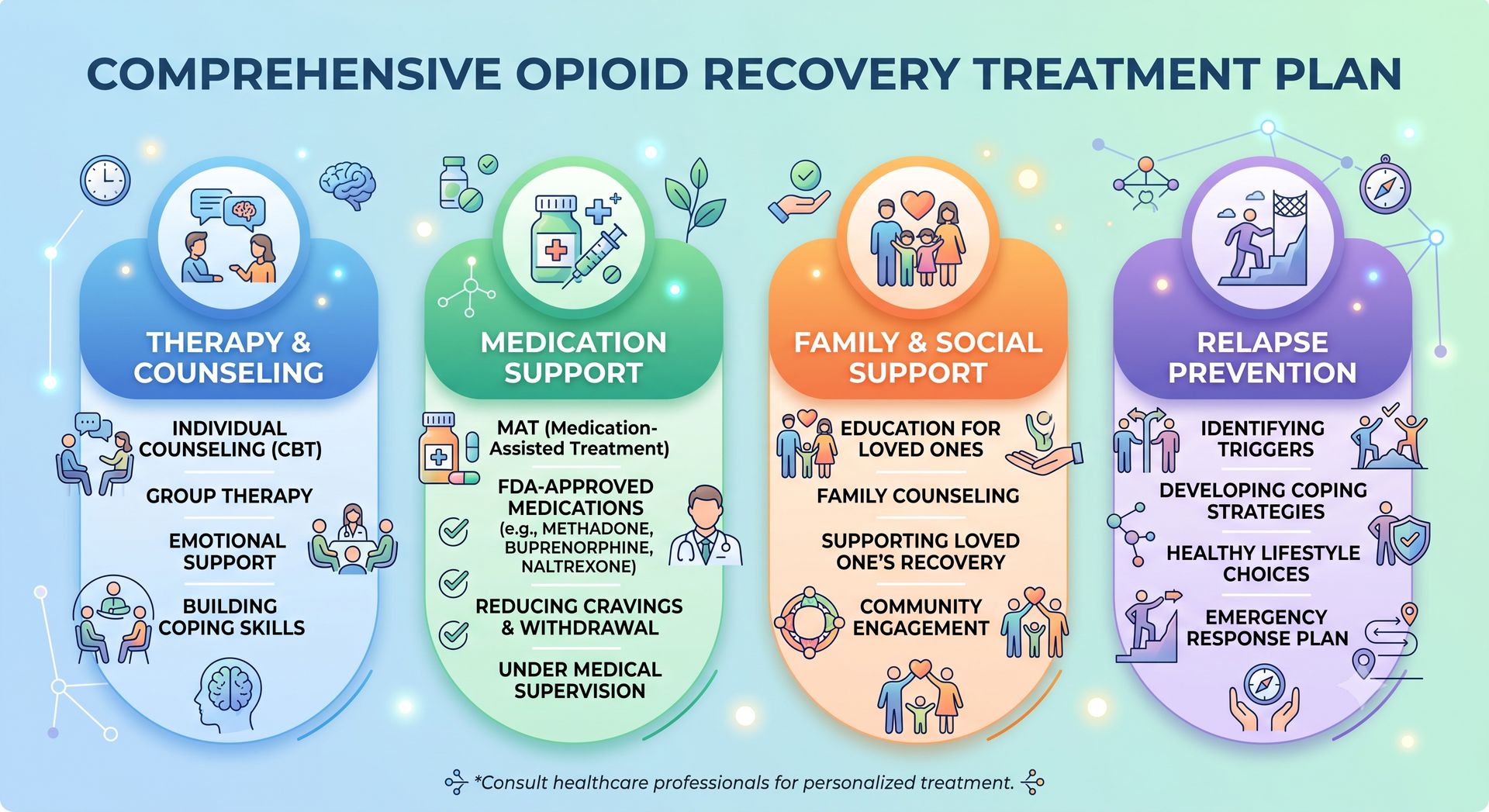
Therapy gives people a place to talk honestly about what is happening without being reduced to their addiction. It can help identify the patterns, pain, stress, or mental health symptoms that may be connected to opioid use.
For families, therapy can also help improve communication. Addiction often creates fear, frustration, and broken trust. Supportive care can help everyone understand what recovery may look like.
Therapy Helps Identify Triggers
Triggers can include stress, grief, certain people, places, pain, boredom, or untreated mental health symptoms. Knowing what increases risk gives the person a better chance to respond before relapse happens.
A treatment plan may include coping tools, emergency steps, and support contacts. This helps the person prepare for hard moments instead of facing them alone.
Mental Health Care Can Strengthen Recovery
Opioid addiction can occur alongside anxiety, depression, trauma, ADHD, or other concerns. When these issues are not addressed, recovery may feel harder than it needs to be.
Some people seeking addiction care may also benefit from
ADHD Treatment in Huntington, WV if attention, impulsivity, or emotional regulation are part of the bigger picture. Treating mental health needs can support better long-term progress.
What Can Families Do When Someone Needs Help?

Families often feel stuck between wanting to help and not knowing what to say. Pushing too hard can lead to conflict, but saying nothing can feel frightening.
A calm, direct conversation is usually better than blame. It helps to focus on concern, safety, and support. For example, “I care about you, and I want to help you talk to someone” is more useful than arguing about every past mistake.
Look for Signs That Care Is Needed
Possible signs may include withdrawal from family, missed responsibilities, financial problems, changes in sleep, mood swings, secrecy, or repeated promises to stop using without being able to follow through.
If there is an immediate overdose risk, emergency help should be contacted right away. Opioid addiction can be dangerous, and quick action can save a life.
Support Does Not Mean Ignoring Boundaries
Families can offer rides, help make calls, attend appointments when appropriate, and encourage treatment. At the same time, healthy boundaries matter.
Support should not mean covering up dangerous behavior or sacrificing the family’s safety. Professional addiction treatment can help families understand what support should look like.
People looking for a broader starting point may also review Opioid Addiction Treatment in Huntington, WV to better understand care options and next steps.
Why Local Support Matters in Huntington, WV
Recovery can feel more manageable when care is close to home. For people in Huntington, WV, local Opioid Addiction Treatment can make it easier to attend appointments, involve supportive family members, and stay connected to daily responsibilities while receiving help. Having a nearby provider also matters when recovery needs change, because ongoing support is often just as important as the first appointment.
Call AIM Behavioral Health for Confidential Support
AIM Behavioral Health provides Opioid Addiction Treatment for people seeking help and families looking for answers. To schedule a confidential appointment in the Huntington, WV area, call 606-618-0282 today.
Frequently Asked Questions

What is the first step in Opioid Addiction Treatment?
The first step is usually a confidential assessment. A provider will ask about opioid use, health history, mental health symptoms, safety concerns, and recovery goals. This helps determine what type of addiction treatment may be the best fit.
Can opioid recovery happen without inpatient rehab?
Some people can begin opioid recovery with outpatient care, while others may need a higher level of support. The right option depends on withdrawal risk, overdose risk, home environment, mental health needs, and support system. A professional evaluation can help guide that decision.
Does medication support replace therapy?
No. Medication support may help with cravings or withdrawal symptoms, but therapy and recovery planning are still important. Treatment works best when it addresses the physical, emotional, and behavioral parts of opioid addiction.
How can I help a family member who refuses treatment?
Start with a calm conversation focused on concern and safety. Avoid shaming language, and offer to help with a phone call or appointment. If there is immediate danger, overdose risk, or a medical emergency, call emergency services right away.
Is Opioid Addiction Treatment confidential?
Yes, addiction treatment is handled with privacy and respect. When you call a provider, you can ask what information is kept confidential and how appointments are managed. This can help people feel safer taking the first step.
Opioid addiction can feel heavy, but help is available. With the right treatment plan, support, and follow-through, recovery can begin one step at a time. If you or someone you love in Huntington, WV is ready to talk, call AIM Behavioral Health at 606-618-0282 for a confidential appointment.